


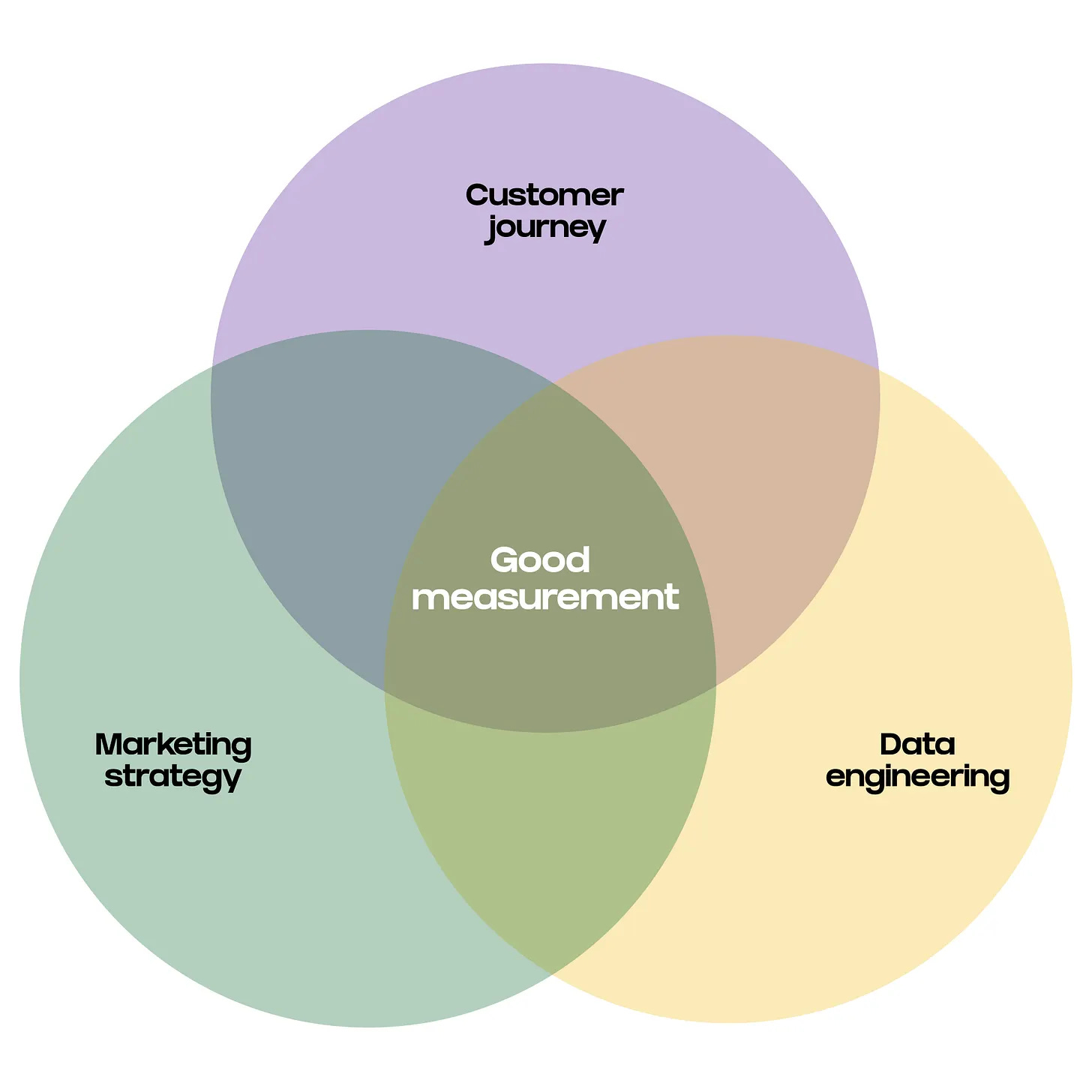
Good measurement is difficult. It requires marketing strategy, customer journey knowledge, and data skills to come together, so most teams default to their analytics tool and ad platform reporting. That default has a cost.
In this article, we cover four advantages that go to the teams who push past it: buying into channels competitors can’t justify, sending better conversion signals to the ad platforms, finding budget efficiencies through granular reporting, and avoiding the measurement debt that makes future spend impossible to evaluate.
Measurement is difficult, so we settle for defaults
Nobody needs convincing that measurement matters. The problem is that doing it well is genuinely hard. It asks for marketing strategy, an understanding of the customer journey, technical data work, and someone who can connect all three. That combination is rare in one team, let alone in one person.
So most teams, quite reasonably, work with what’s already in place: a web or product analytics tool like GA4 or Amplitude, plus the ad platforms reporting on their own performance. During our Attribution Masterclass, one participant summed up where that leads: “We’re spending six figures monthly on marketing and can’t confidently say which channels drive results.”
The defaults will tell you how many conversions you got last month. But they quietly limit what measurement can do for the business. After years of setting up tracking and attribution for growth-stage and B2B companies, these are the four advantages I keep seeing go to the teams who push past them.
1. The channels your defaults can’t see have less competition
GA4 and ad platform reporting are click-based. And certain valuable strategies are much harder to measure with clicks than others: podcasts, influencers, newsletters, sponsorships, video. Users watch or read, but don’t necessarily click. Or they click on one device and convert on another, days later.
Most teams look at a channel like that, see no ROI in the dashboard, and put the budget back into Paid Search and, with luck, Paid Social.
And since almost everyone relies on the same click-based data, almost everyone reaches the same conclusion: budget crowds into the easy-to-track channels, and their acquisition costs rise.
Meanwhile, the harder-to-track channels stay cheaper than their real performance justifies.
You don’t need perfect measurement to buy into them. You need rough, honest measurement, usually a combination of methods: attribution surveys (”how did you hear about us?”), and signal metrics like brand search and direct traffic lined up against your campaign dates. Individually, each source is incomplete. Together, they’ll tell you whether a channel works, which is all a budget decision needs.
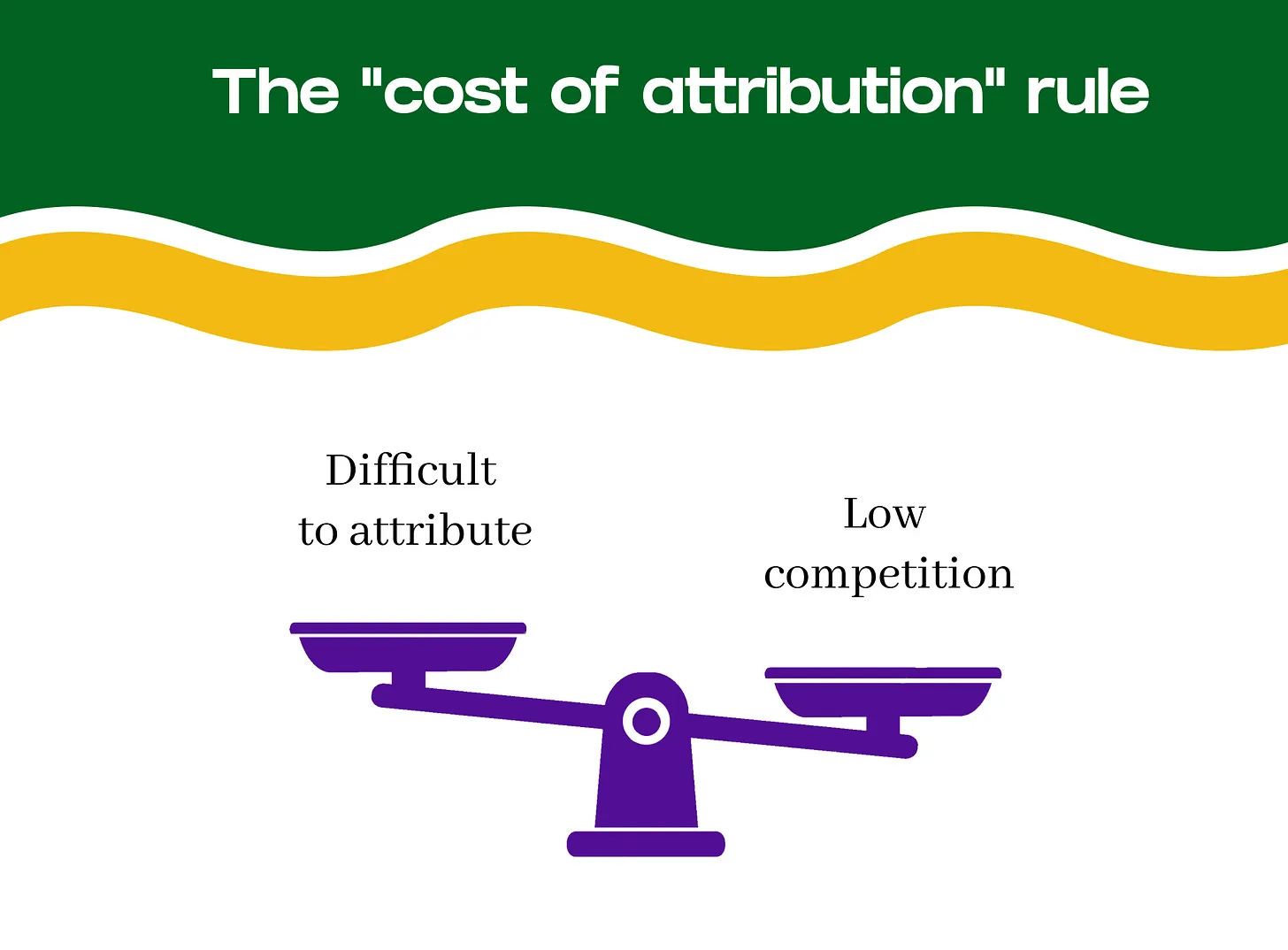
If you can see a return there that your competitors can’t, you’re buying in a market with fewer bidders and softer prices.
2. Conversion tracking trains the algorithm, feed it well
Now to the channels everyone can measure. On Meta and Google, conversion tracking stopped being just reporting years ago. The platforms optimise toward whatever event you send them. Your conversion data is the training signal for their bidding, which means its quality directly shapes who your ads reach.
Take a B2B example. Say a meaningful share of your form fills are students, competitors, and people who never answer the phone. If “form filled” is the only event you send back, you’ve told the algorithm that’s what success looks like, and it will find you more of it. An advertiser sending back “sales-qualified lead” instead, or better, actual pipeline value, is training the same algorithm in the same auction to look for different people entirely.
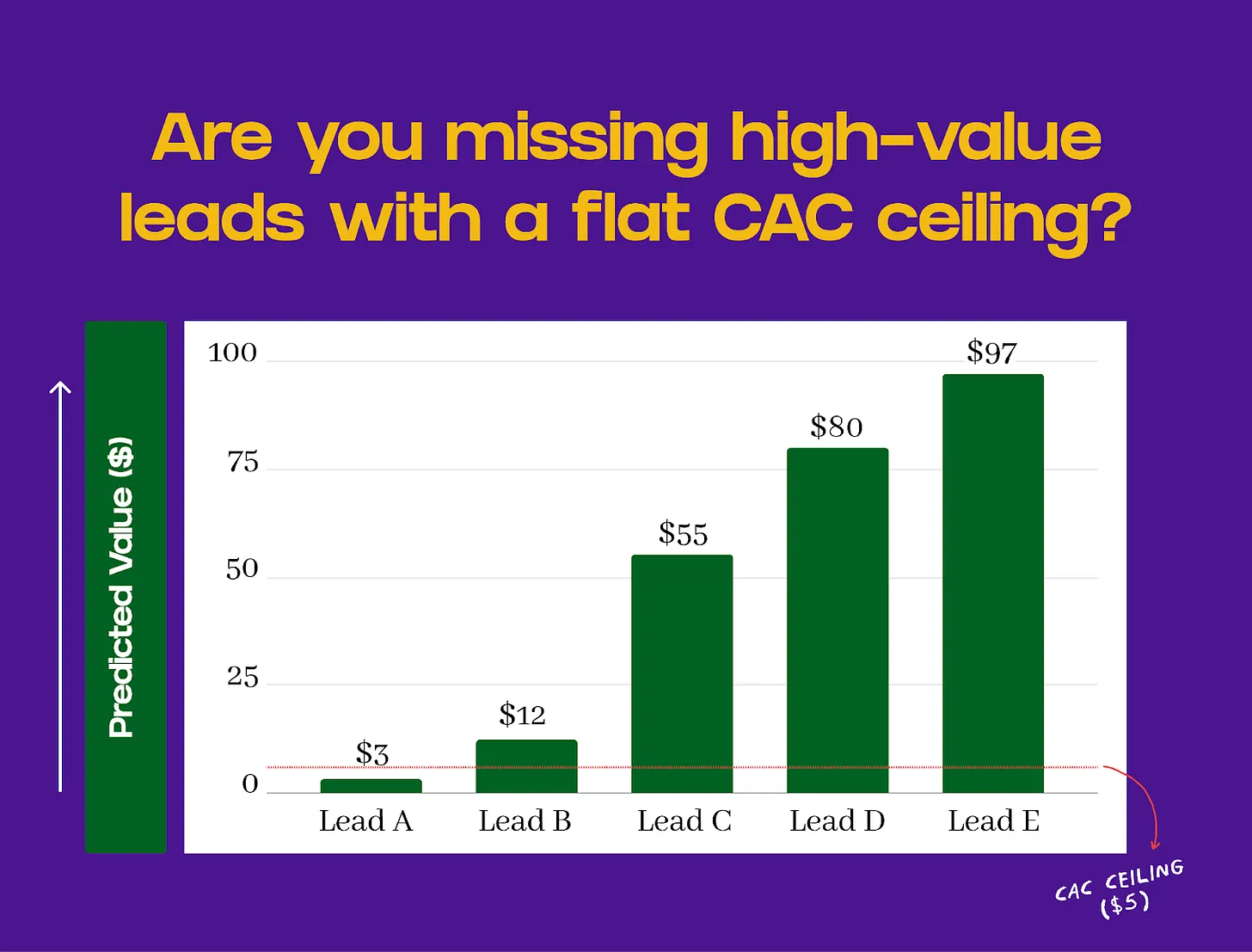
The same logic applies to deduplicating events so the platform isn’t learning from double-counted conversions, and to sending conversion values that reflect what a customer is actually worth. Same channel, same budget: the difference is in the data layer underneath.
3. Granular reporting finds the budget your channel-level view is wasting
Even with clean conversion tracking, most reporting stops at the channel or campaign level: total spend, total conversions, one CAC. That view treats every converted user as equally valuable. For most businesses, they’re not.
A project I did with VEED makes this concrete. VEED was spending six figures monthly on Google Ads and wanted to grow Paid Search spend 20% month-over-month without sacrificing efficiency. Their setup was solid by conventional standards. But it measured CAC on subscriptions, treating all subscribers as the same ROI, when in reality ARPU varied a lot by market and by product use case.
We built ROAS reporting at campaign, ad group and keyword level, joining ad spend with their attribution and payments data. The analysis showed that some heavily-bought use cases attracted subscribers who didn’t retain, while others brought in significantly higher-ARPU users. VEED restructured campaigns around use cases and shifted budget accordingly. In the tested campaigns, attributed subscriptions grew 20% with flat CAC, impression share on generic terms rose 10%, and newly acquired users had 12% higher ARPU.
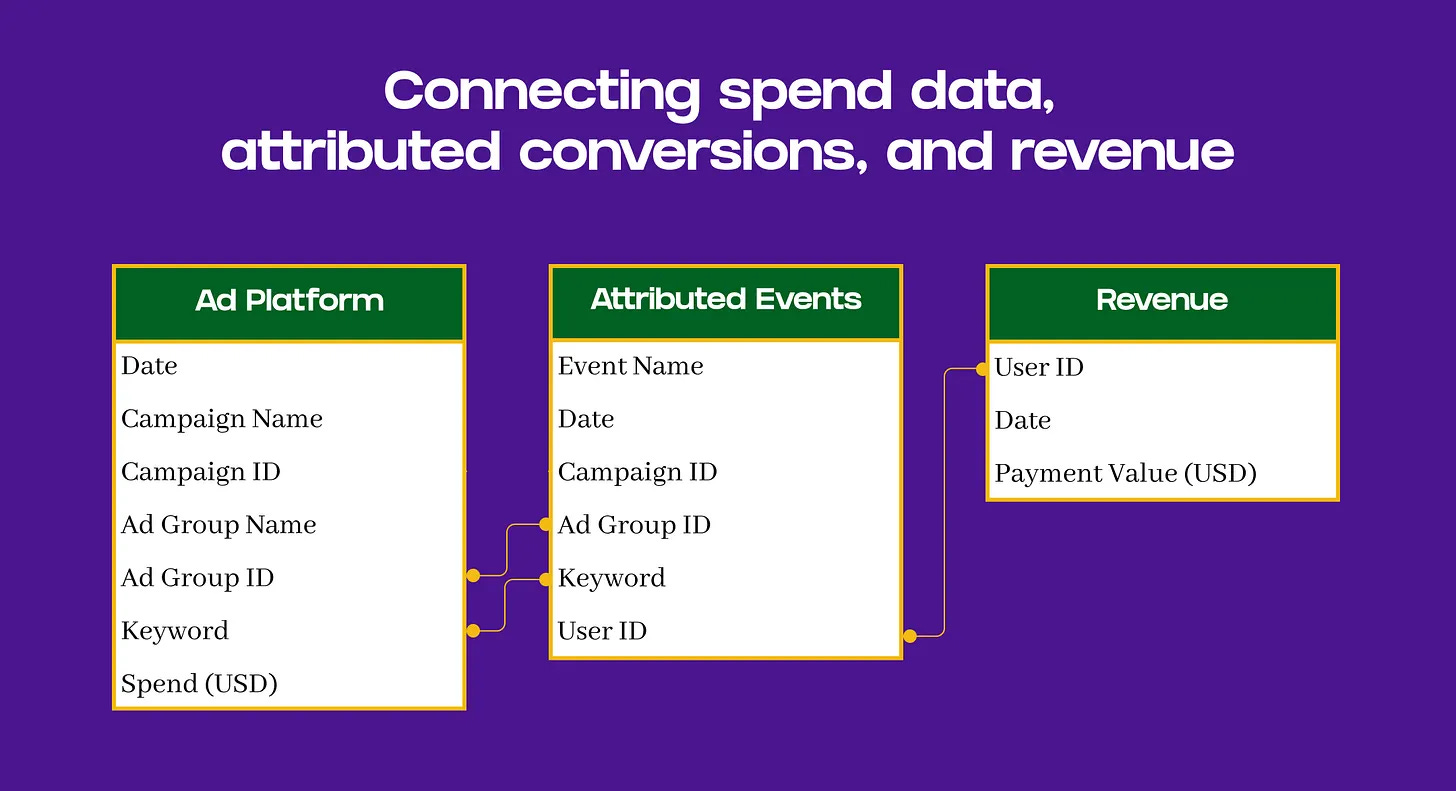
Those are results from one company and one channel, so read them as an illustration, not a promise. The point is the mechanism: at channel level, that budget shift was invisible. The insight only existed at keyword and use-case granularity.
4. Measurement debt compounds, and you can’t backfill it
This one is the least visible, and the one I’d warn founders about first.
Picture a company growing well on organic: word of mouth, SEO, community. Nobody feels urgency to measure where growth comes from, because it’s working and it’s free. Then organic plateaus, as it tends to, and the company turns to paid.
Now every readout is muddy. There’s no baseline, so nobody can say what organic was going to deliver anyway. Brand campaigns cannibalise branded search and it looks like performance. Retargeting takes credit for conversions that were already coming. Each decision becomes a guess built on another guess.
And the methods that would answer these questions properly need history. Incrementality testing needs clean conversion data to read. None of this can be backfilled. Data you didn’t collect is gone, so the team starts a twelve-month clock while spending real money half-blind.
That’s what makes it debt rather than a to-do item: the cost isn’t the setup work, it’s the years of spend you can’t evaluate.
So we built Propel to sit at this intersection
Measurement is difficult because the skill set behind it is rare: marketing strategy and data engineering rarely live in the same team. That intersection is exactly where we decided to build Propel.
If you want measurement you can interrogate because you’re planning to scale spend and need numbers that can keep up, let’s talk. And for more on attribution, signals, and measurement, don’t forget to subscribe below:
It has to be difficult to persuade an early founder to care about measurement debt when organic growth is really going well for them. How have you been able to convince a founder the importance of capturing the data from the beginning?