


A lot of my sales calls (maybe too many, even) end with me telling someone not to buy anything from me.
They’ve come to me a year or two early, and I’d rather say so than take a deposit. The rule I use: can I convince myself they’ll make my fee back from the budget / channel mix changes the work leads to? A custom attribution build takes months and costs real money. If I can’t see impactful decisions waiting on the other side, there’s nothing for it to pay for.
I assumed that was uncontroversial.
Then we ran a Propel webinar on attribution in the warehouse, about as technical as our content gets. I went through the registrations afterwards. Half the people who joined were spending under $1M a year on ads.
In this article I cover the two questions worth asking before you sign off on an attribution project, why the spend threshold everyone quotes (including me) is a poor proxy for both, and what to build instead if the answers come back no.
Maybe this is an article you receive in my regular newsletter. Maybe this is an article that you directly received from me after booking a call for Propel and getting the “not now”.
What I mean by attribution
The word covers almost anything now, so let me narrow it.
A custom model. It pulls your web and product analytics, your CRM, your ad platforms and usually the “how did you hear about us” answer into one place, then stitches them into a single view of the journey. One picture of how campaigns stack on each other, instead of four platforms all claiming the same conversion.
That’s heavy work. Here’s what it isn’t:
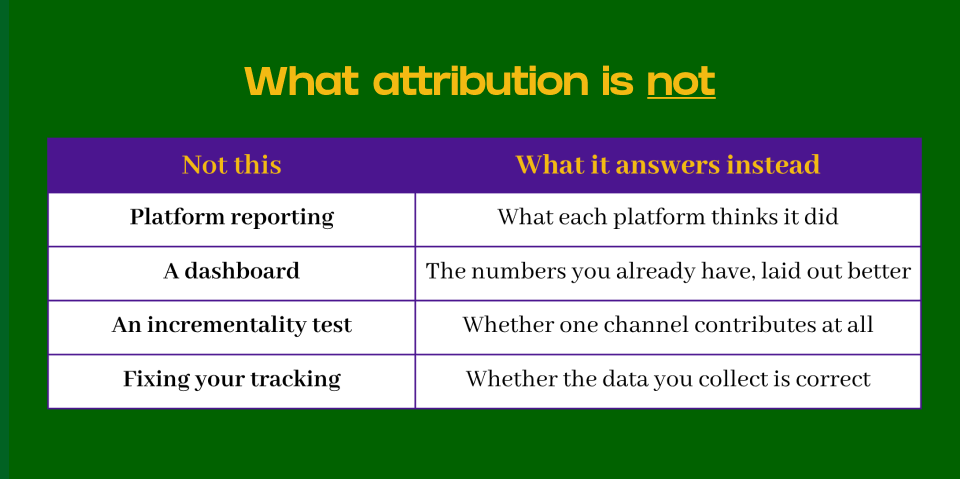
Question one: is anything working yet?
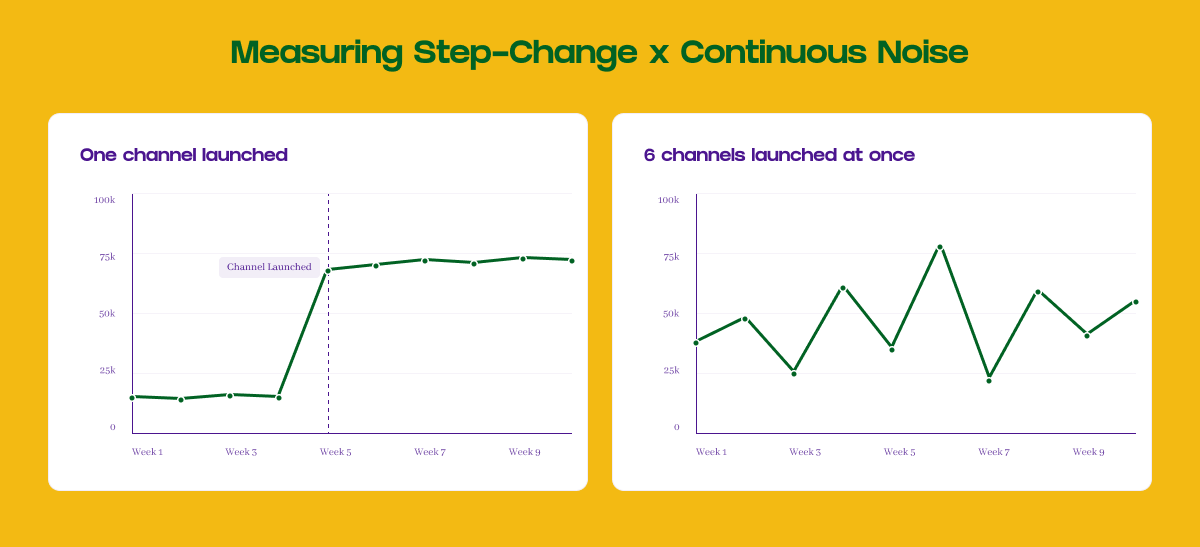
Most people who come to me want to find out what’s working. That’s an incrementality question, and a model is an expensive way to answer it. Turn the channel off in a few geos. Hold out part of the audience. See what happens. (I understand this is not as simple–but my recommendation for understanding if something is working it’s usually to turn it off.)
Attribution answers something else. Several things are working, so where does the next chunk of budget go? That’s where it earns its money: catching channels eating each other, or branded search harvesting demand your YouTube spend created. I’ve written about a version of this split in when to use click attribution or MMM.
Which means you need at least one channel already working. Otherwise there’s nothing to allocate between.
And when you’re small, that’s not hard to establish. You switch a channel on and the line goes up. Or it doesn’t. Two channels, low volumes, not much else it could have been.
The pattern I actually run into is different. Advertisers get to five or six channels before any of them has proved anything, then go looking for measurement to sort it out. That’s not a measurement problem. It’s a strategy problem wearing a measurement costume: too many channels, too early, none funded long enough to show a signal. A model will tell you that you have six channels and no evidence about any of them. Which is where you came in.
I stay out of growth advice here, so take this as an observation. When I see this, the advertiser is usually better off putting more money behind what already works than adding a seventh thing. (Nine times out of ten. Purely anecdotal, no study behind it, and I’d rather say so than dress it up as research.)
Question two: is the problem actually hard?
Say something is working. That’s not enough on its own, because plenty of setups are easy to measure with tools you already have.
This is where the spend threshold comes in, and where I have to own an oversimplification. Even Propel qualifies leads at $1M a year and up. It’s in our decks and on our site. It’s a proxy, and a rough one.
It works for a reason that has nothing to do with the number. Most brands spend their first million on Google, and Google is about as easy as attribution gets: high intent, a clear click path, a conversion in the same session. You don’t need a model for that. You need clean conversion tracking and someone reading the account properly. What changes higher up isn’t the spend. It’s what the money is buying.
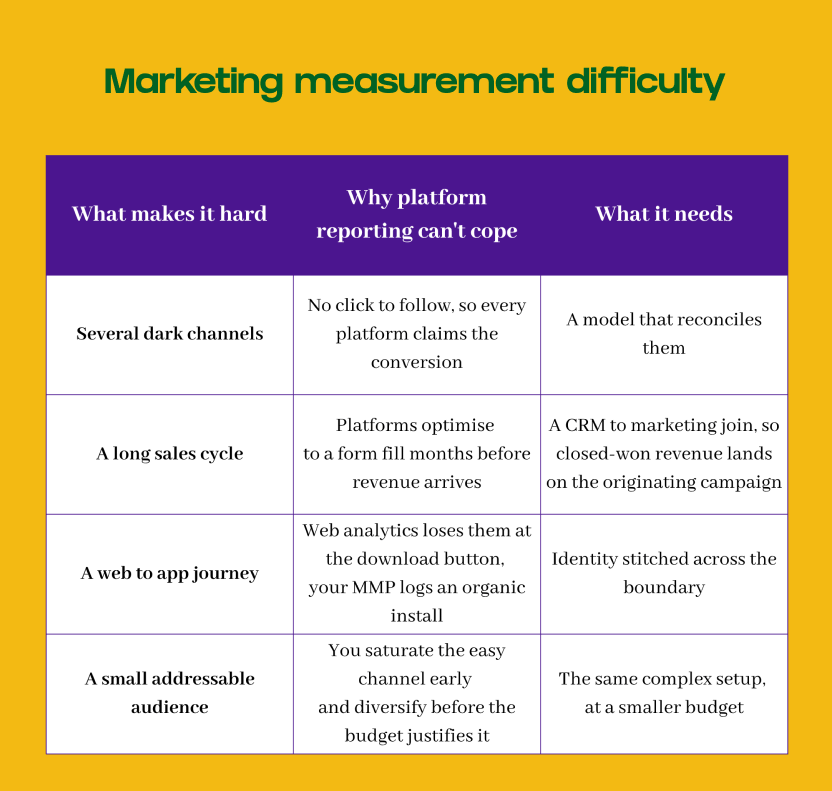
That last one is easy to miss. I worked on a wealth product where nearly everyone was in London. We ran out of Google before we ran out of budget, which forced a varied mix far earlier than the spend level suggested. The constraint was audience size, not ambition.
If the answer to either question is no
You think you would finish this article without having homework for your data team?
There’s still plenty to get on with, and it’s worth starting the moment one channel works.
Get ROAS right. Sounds solved, often isn’t. What counts as revenue, over what window, net of what costs, credited to which touchpoint. There’s a worked example in the VEED ROAS report. The check: have two people calculate ROAS for the same campaign and month separately. If the numbers differ, that’s your project.
Predict conversion value. Ecommerce can skip this: you know the order value at conversion and pass it through (but obviously, it always depends: maybe you have many recurring purchases). For everyone else a signup is worth wildly different amounts, and if you hand the platforms one undifferentiated conversion they’ll find you more of the cheap ones. Modelling a predicted value and feeding it back makes a real difference on Google and Meta, where the algorithm does your allocation. The check: look at the spread of first-year revenue across last year’s conversions. If the top decile is worth several times the median, the platforms are optimising blind.
Fix the tracking you have. Focus on data collection. Least glamorous, often the highest return. Double-firing events, inconsistent UTMs, a consent banner quietly eating traffic. A model built on top inherits all of it, and plenty of my “we have a data problem” conversations land right here. I wrote about the flavours in you don’t have a data problem.
None of these is attribution. All three are prerequisites, and each pays off on its own.
Where the line sits
I don’t have a formula. When a lead comes in I do the sums in my head: what are they spending, what on, and can I find enough allocation decisions in that mix to beat my own fee. Above roughly $3M a year in paid media I’m confident I can. Below that it depends entirely on the mix, and the answer can be “no”.
So no number, just an order:
Prove a channel works with a test, not a model.
Clean up the tracking you already have.
Agree one ROAS definition and get everyone calculating it the same way.
Model conversion value if your conversions aren’t all worth the same.
Then ask whether you need a model to split budget between channels.
Go after step five first and you’ll probably spend months confirming what the line already showed you.
If you’ve got a channel that works, a mix that’s genuinely hard to measure, and a funded plan to scale, that’s when this stops being premature. That’s the work we do at Propel. If you’re not there yet, I’d rather say so.